Overview
The SARAH project, funded by the Spanish State Research Agency –depending on the Ministry of Science and Innovation– aims at contributing to the generation of knowledge in the field of road safety and Smart technologies applied to road infrastructures.
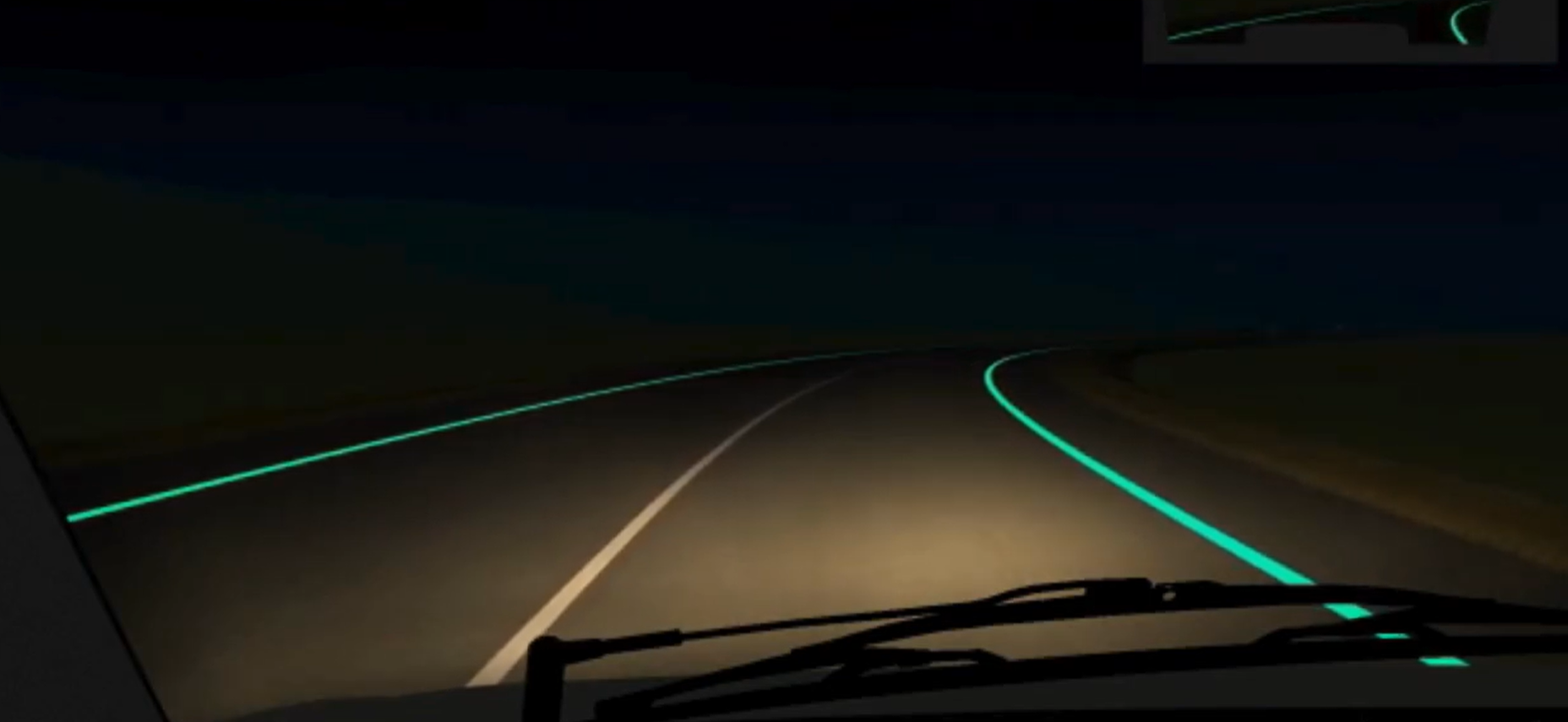
We intend to determine how current and future Smart Road Technologies (SRT) influence the driving behavior of road users, as well as to establish the acceptance and awareness towards these technologies, considering cross-cultural differences as well.
To achieve our research aims, we are going to implement a multidimensional methodological approach: we have designed different driving simulation experiments, and we plan to use other quantitative and qualitative methods such as surveys, focus groups, and interviews.
The final purpose of this project is to help reduce traffic accidents, which is one of the major problems of our society.
SARAH project has a marked multidisciplinary character: while the Technical Engineering competence is necessary to design, build, and run the driving scenarios, as well as to collect and analyze technical data on driving behavior and performance; Applied Psychology and Neuroergonomics are fundamental to design the experimental protocols necessary to study the user experience connected with SRT, and analyzing the feedback from participants and their perspectives. Furthermore, cross-cultural comparison of the scientific results will be conducted. Driving simulation experiments will be carried out at three different countries (Spain, Italy, and Norway). Such approach will allow a cross-cultural analysis, which will enable to reach relevant high impact outputs at an international scale.
Objectives
SARAH main objective is to investigate the behavioral effects, the driver acceptance and adaptation, as well as the safety implications of the adoption of Smart Road Technologies (SRT) on Spanish roads. The considered context will include SAE levels from 1 (driver assistance) to 3 (conditionally automated driving).
The specific objectives of SARAH are as follows:
O1. To reduce potential SRT’s negative effects on safety due to unexpected changes in driver performance and behavior.
O2. To fight negative acceptance and increase drivers’ awareness when introducing SRT on roads.
O3. To enhance the potential benefit in safety-related factors with the introduction of SRT.
O4. To mitigate negative consequences due to different social and cultural backgrounds among international drivers.
O5. To ensure a “Safe System Approach” when designing ground-breaking futuristic SRT.
Such objectives will be investigated in several road and environmental scenarios. Rural road segments operating under uninterrupted flow conditions (i.e., two-lane, multilane highways, and motorways) will be investigated. Because of the different driver responses, (i) free-flow speed and (ii) conditioned traffic conditions will be evaluated. Furthermore, good sunny weather vs. unfavorable low-visibility conditions (i.e., night-time, fog, rain) will be considered to understand their impact. These objectives are consistent with the European “Vision Zero” policy, the Spanish Safe, Sustainable, and Connected Mobility Strategy 2030, and the National State Plan for Scientific, Technical, and Innovation Research 2021-2023.
More info
All the complete info on the project can be retreived on the official webpage, here: https://www.neuroergonomia.es/sarah/
Main People

Francesco Angioi
PhD Candidate

Leandro Luigi Di Stasi
Professor
Marco Bassani Professor

Giuseppe Marinelli
Associate Professor