General Description
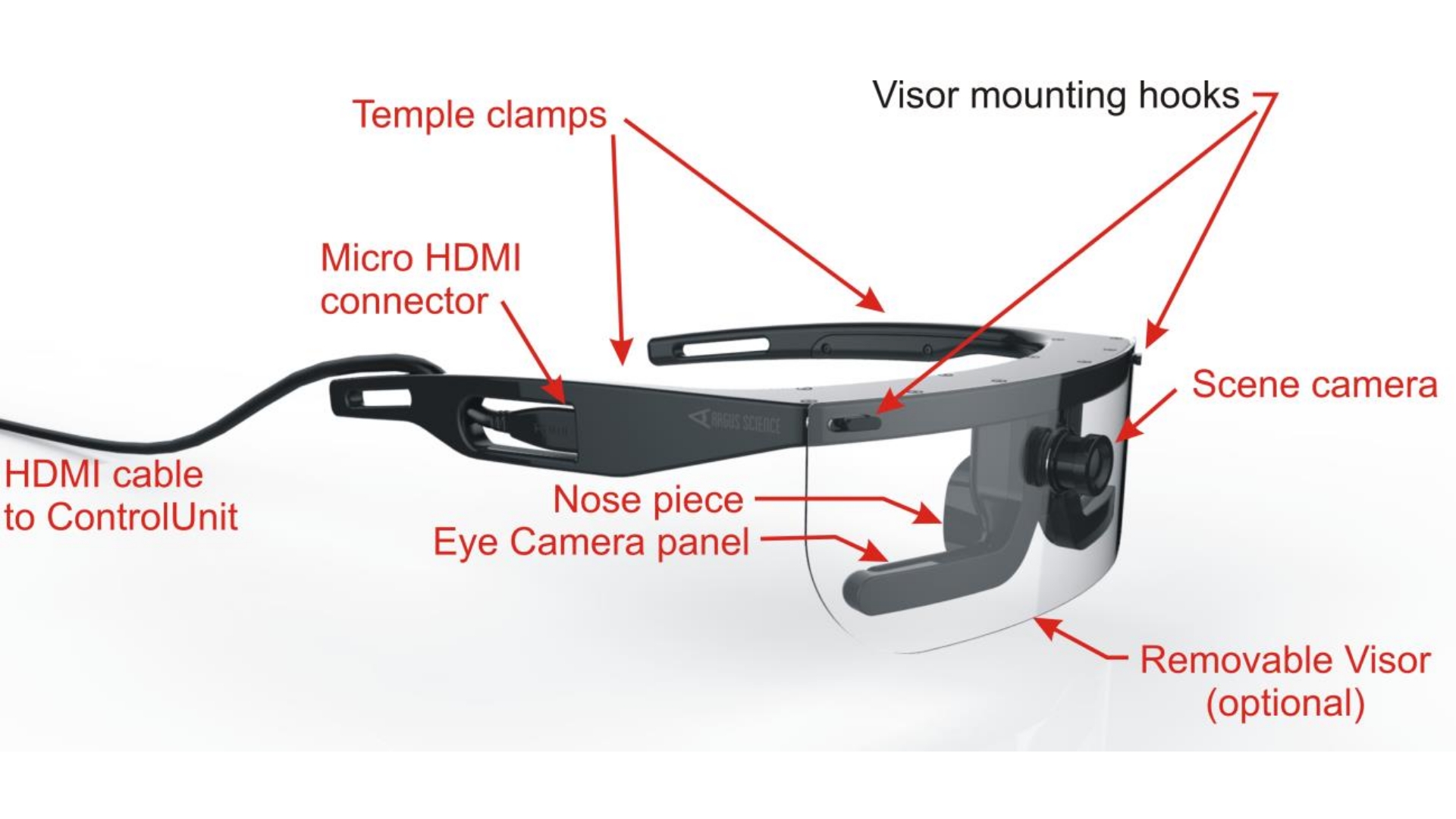
The Argus Science Eye Tracking Glasses, specifically the ETVision system, represent a state-of-the-art solution for precise and comprehensive eye tracking. Designed for both laboratory and real-world applications, these glasses offer unparalleled flexibility and performance. The ETVision system features a lightweight, wearable design that includes binocular eye tracking at 180Hz, providing high-resolution data on gaze direction, pupil diameter, and eyelid position. The glasses are equipped with a wide-angle HD scene camera and a built-in microphone, ensuring that all aspects of the visual and auditory environment are captured.
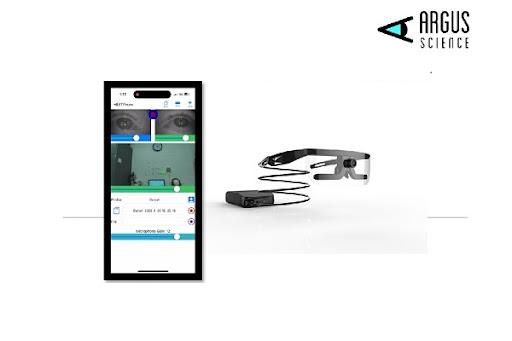
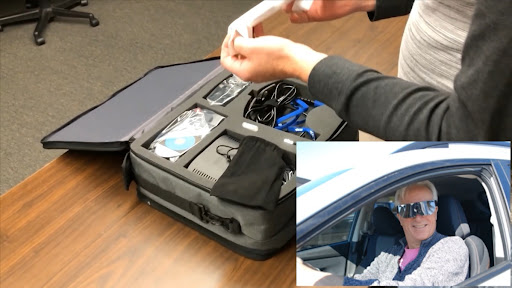
The system is highly user-friendly, with an intuitive interface that supports single-point or multiple-point auto calibration. Data can be transmitted to a laptop via WiFi or LAN cable, or stored locally on a microSD card, offering over five hours of battery-powered recording time. The glasses can be worn over prescription glasses, enhancing comfort and usability for a wide range of participants. The ETVision controller, a compact Linux-based unit, can be carried conveniently, ensuring that the system remains unobtrusive during use.
The ETVision system is also equipped with advanced features such as real-time fixation detection, blink detection, and AI-powered object tracking. The ETAnalysis software provided by Argus Science allows for comprehensive post-processing of the data, including saccade length and velocity analysis, group statistics, and more. This makes the Argus Science Eye Tracking Glasses an indispensable tool for researchers seeking detailed insights into visual behavior.
Research Areas
The Argus Science Eye Tracking Glasses are particularly valuable for research in driving behavior, human interaction, focus, and distraction. Here are some key applications:
Driving Behavior and Safety The eye tracking glasses are essential for studying driving behavior and safety. Researchers can analyze where drivers focus their attention, how they scan the road, and their reaction times to various stimuli. This data is crucial for understanding driver behavior in different conditions, such as urban traffic, highways, and adverse weather. Insights gained can help in developing advanced driver assistance systems (ADAS) and improving road safety measures.
Human Interaction and Ergonomics In the field of human interaction and ergonomics, the glasses provide detailed data on how individuals interact with their environment and technology. This includes studying how drivers interact with in-car systems, such as navigation and infotainment systems, and how these interactions affect their driving performance. The data can be used to design more intuitive and safer user interfaces.
Focus and Attention The eye tracking glasses are ideal for research on focus and attention. By tracking gaze patterns, researchers can determine what captures a driver’s attention and how long they focus on specific objects or areas. This is particularly useful for studying the effectiveness of road signs, advertisements, and other visual stimuli. Understanding these patterns helps in designing better visual aids that enhance driver awareness and safety.
Distraction and Cognitive Load Studying distraction and cognitive load is another critical application. The glasses can help identify sources of distraction, such as mobile phones, passengers, or in-car systems, and measure their impact on driving performance. Researchers can analyze how different types of distractions affect gaze behavior, reaction times, and overall driving safety. This information is vital for developing strategies to mitigate distractions and improve driver focus.
Driver Fatigue and Drowsiness The eye tracking glasses can also be used to monitor signs of driver fatigue and drowsiness. By analyzing blink rates, gaze patterns, and pupil dilation, researchers can detect early signs of fatigue and develop systems to alert drivers before they become a safety risk. This application is particularly important for long-haul truck drivers and others who spend extended periods on the road.
Training and Education In training and educational settings, the glasses can be used to assess and improve driving skills. By providing real-time feedback on gaze behavior and attention, instructors can help drivers develop better habits and improve their overall performance. This application is beneficial for novice drivers, professional drivers, and even in rehabilitation programs for individuals recovering from injuries.
Technical Specifications
| Component | Specification |
|---|---|
| Eye Tracking | Binocular, 180Hz |
| Scene Camera | Wide-angle HD |
| Microphone | Built-in |
| Calibration | Single-point or multiple-point auto calibration |
| Data Transmission | WiFi, LAN cable, or microSD card |
| Battery Life | Over 5 hours |
| Compatibility | Can be worn over prescription glasses |
| Controller | Linux-based, portable |
| Software | ETAnalysis for post-processing |
| Advanced Features | Real-time fixation and blink detection, AI object tracking |