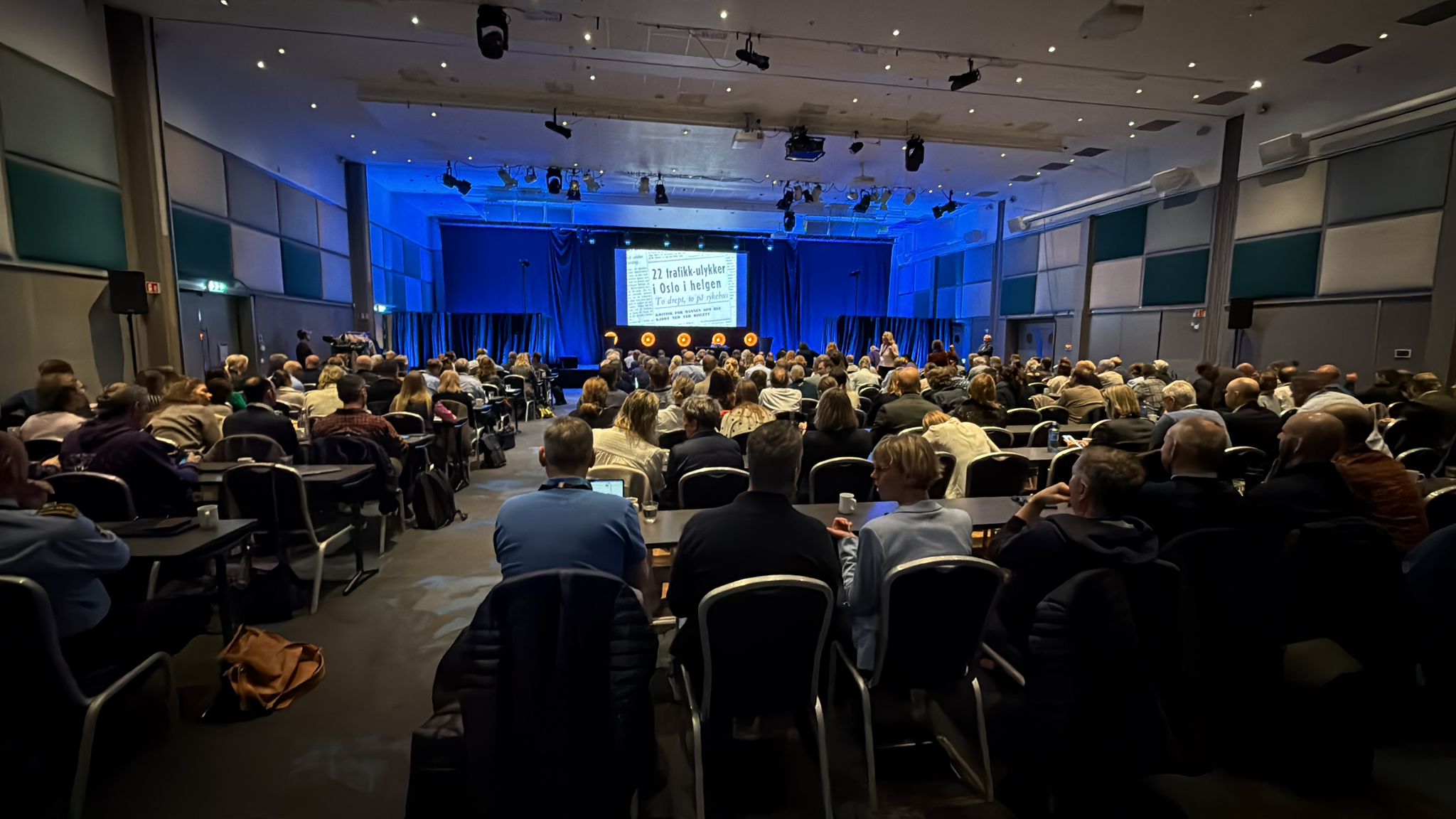
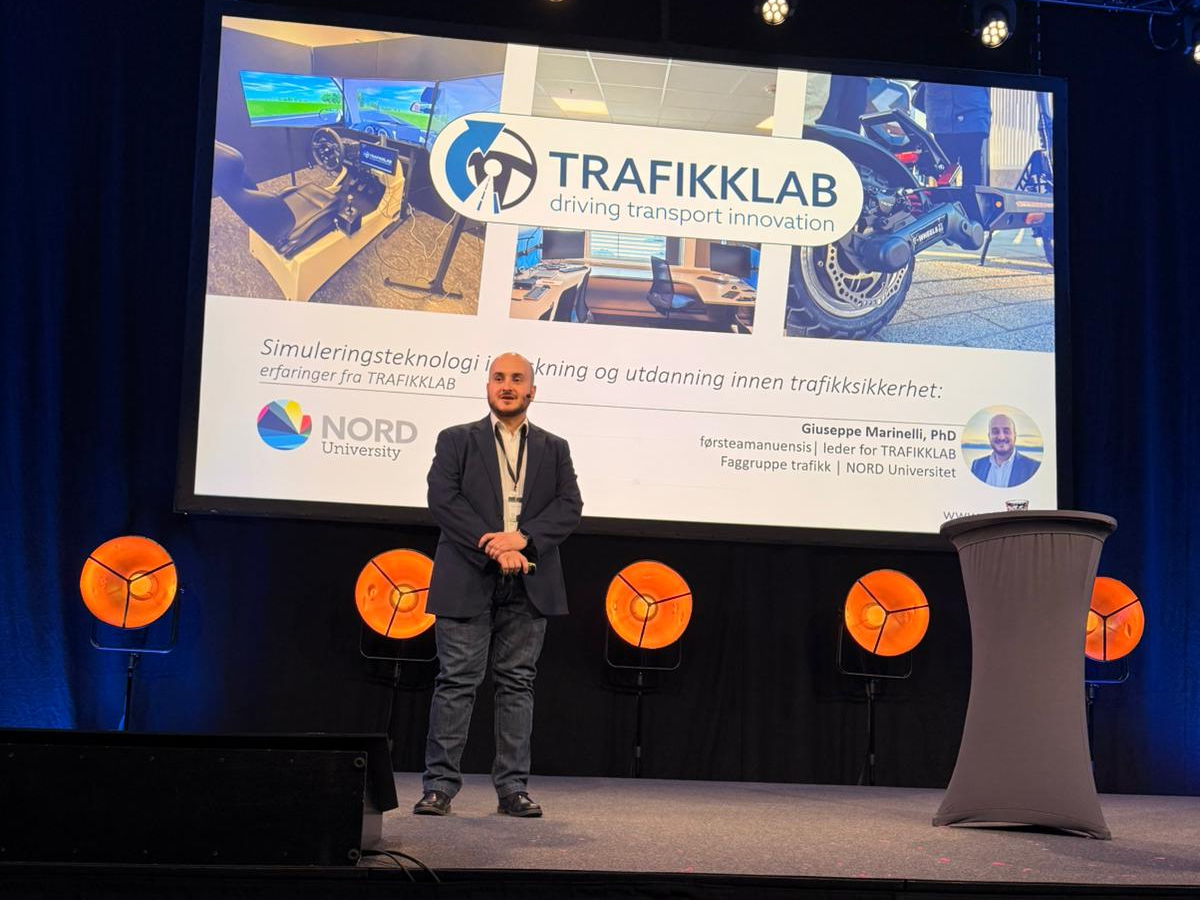
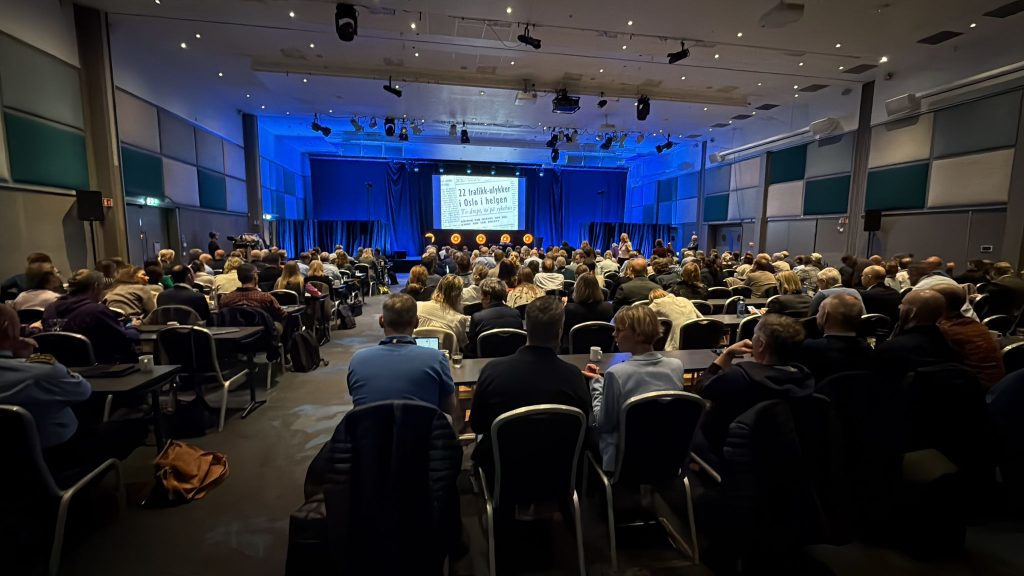
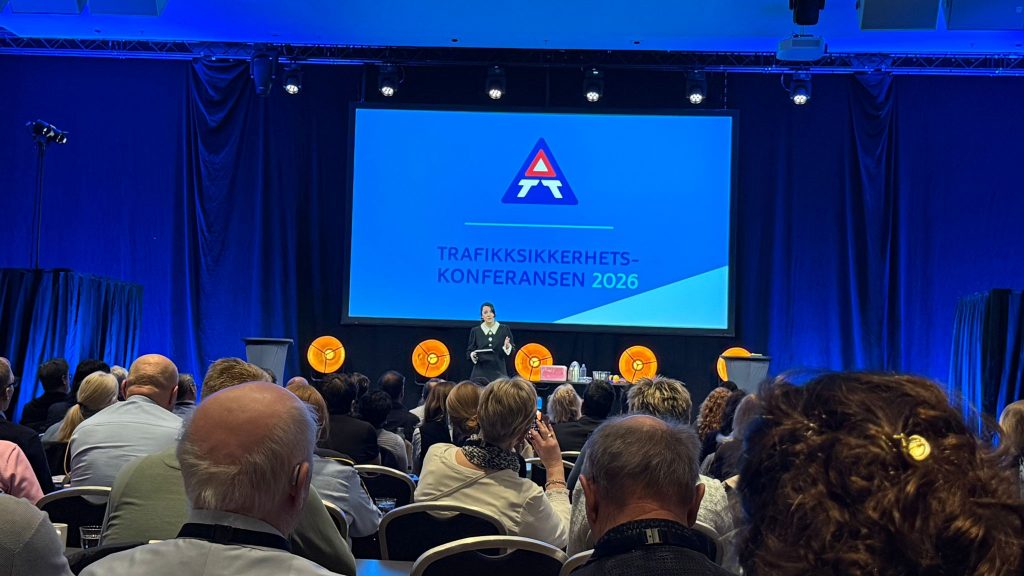
The Trafikksikkerhetskonferansen 2026, organized as always in Oslo by Trygg Trafikk, brought together researchers, practitioners, educators, and policymakers with a shared goal: improving road safety through knowledge, innovation, and collaboration. During the conference, TRAFIKKLAB had the opportunity to contribute by presenting how simulation technologies are used in both driver education and traffic safety research, and how these tools are shaping the future of mobility training.
Why Simulation Matters in Driver Training
One of the central questions addressed in the presentation was simple but crucial: why should we use simulators in driver education and research?
Simulation makes it possible to expose drivers and students to critical, rare, and potentially dangerous traffic situations—such as emergency maneuvers, high cognitive workload, system failures, or severe weather conditions—without creating real risk for people or infrastructure. Many of these scenarios are either impossible or unethical to reproduce in real traffic, yet they are essential for learning and safety research.
From an educational perspective, simulators support experience‑based learning, allowing learners to make decisions, experience consequences, and reflect on their actions in a controlled environment. When combined with clear learning objectives, structured guidance, and proper briefing and debriefing, the simulator becomes a powerful pedagogical tool—not a game, but a learning environment designed to build risk awareness and decision‑making skills.
An important message shared during the conference was that extreme realism is not always necessary. In many cases, static or medium‑fidelity simulators are sufficient to achieve learning outcomes, while also reducing costs and minimizing simulator sickness. The true value of simulation lies not in the hardware itself, but in how the technology is used.
When Driving Becomes a Laboratory
From a research perspective, driving simulators offer something that real‑world studies rarely can: full control and repeatability. Traffic density, road layout, weather, vehicle characteristics, automation levels, and critical events can all be precisely defined and reproduced across drivers, groups, and even countries.
This level of control allows researchers to collect objective and high‑resolution data, and to combine driving performance measures with eye‑tracking, questionnaires, and vehicle data. In this sense, the simulator turns driving into a laboratory experiment, producing reproducible knowledge rather than isolated observations.

Research Projects Presented from TRAFIKKLAB
During the presentation, several TRAFIKKLAB research projects were highlighted to illustrate how simulation is used in practice.
One study focused on take‑over control in conditionally automated vehicles (SAE Level 3). When automated systems reach their limits, drivers must retake control quickly and effectively. Using a driving simulator, different take‑over mechanisms—such as buttons, steering wheel input, and pedals—were compared in critical scenarios including highway merging and emergency situations. The results showed clear safety differences between the mechanisms, underlining how human‑machine interface design can directly influence road safety.
Another project examined whether short training on in‑car touchscreen systems can improve driving performance. Modern vehicles increasingly replace physical buttons with large touchscreens, which may be unfamiliar and distracting—especially in rental or shared cars. In a simulator experiment with Norwegian drivers, the study explored whether a brief introduction to the system before driving could reduce distraction and improve task performance. The findings suggest that even short training sessions may have positive effects, highlighting the role of education alongside technology design.
These projects demonstrate how simulation enables researchers to study emerging vehicle technologies before they are widely deployed on public roads—and to translate scientific insights into practical recommendations for education, design, and policy.
TRAFIKKLAB’s Role and Future Directions
As part of the Faculty of Traffic Studies at Nord University, TRAFIKKLAB works at the intersection of education, research, and innovation, with a national responsibility and a nearly unique role in Norway. The lab supports training and competence development for traffic teachers, driving school managers, driving examiners, emergency driving instructors, and many others—across all vehicle classes.
Looking ahead, TRAFIKKLAB continues to explore new ways of integrating simulators into teaching, expanding research on emerging vehicle technologies, and building international partnerships. Simulation will play a key role in understanding how drivers interact with increasingly complex transport systems—and in ensuring that innovation leads to safer, smarter, and more sustainable mobility.
A Shared Vision for Road Safety
The Trafikksikkerhetskonferansen provided an important arena to share experiences, results, and visions with the wider road safety community. The discussions confirmed that simulators are no longer niche tools, but central components of modern driver education and traffic safety research.
By combining technology with pedagogy and scientific rigor, TRAFIKKLAB aims to contribute to a future where innovation serves its ultimate purpose: saving lives on the road.