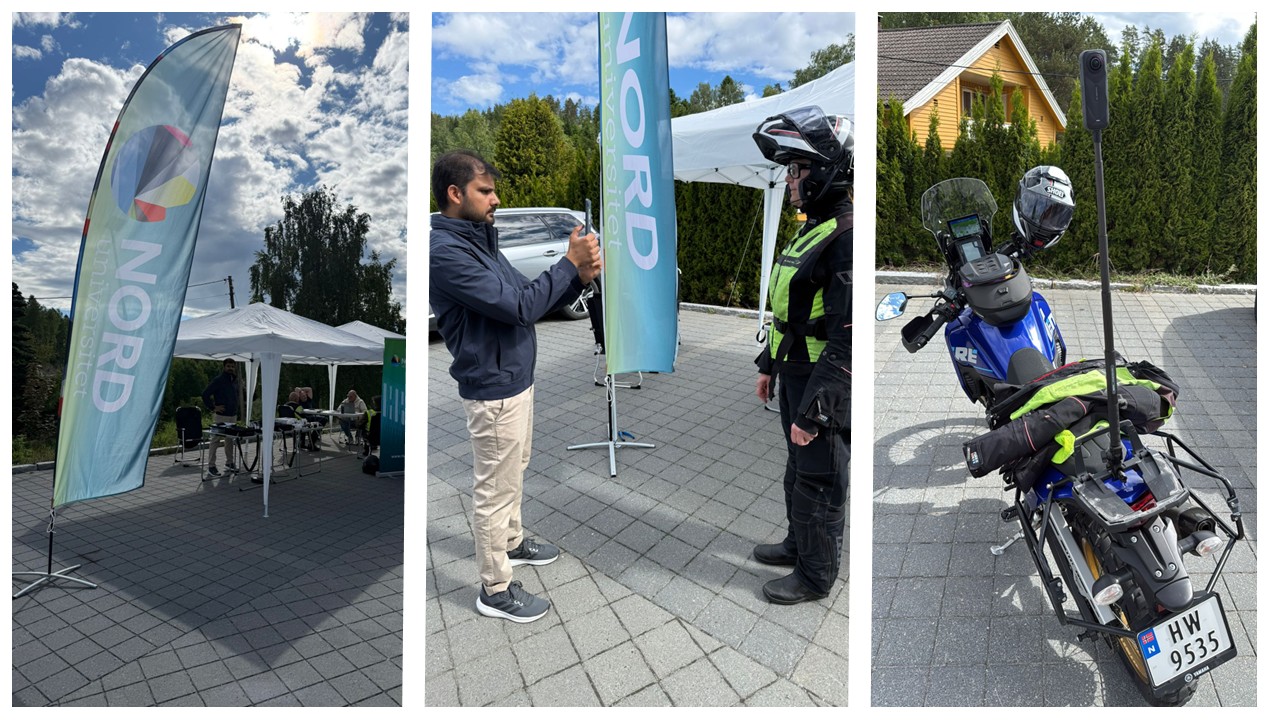
TRAFIKKLAB at Nord University has successfully completed the first phase of data collection in a research project investigating how motorcycle-specific road markings may influence rider attention, behaviour, and safety in road curves. The project is funded by the Norwegian Public Roads Administration and aims to provide evidence-based knowledge to support future road safety initiatives for motorcyclists.
The study focuses on a traffic safety measure that has already attracted attention in several European countries, particularly Austria, where dedicated road markings have been introduced to help motorcyclists adopt safer riding lines and speed choices through curves. While previous work has suggested potential safety benefits, little is known about how these markings affect visual attention and decision-making while riding.
To address this knowledge gap, researchers conducted field studies on a road section near Lillestrøm, just outside Oslo in southern Norway. The selected route offers a variety of geometric characteristics that are particularly relevant from a motorcycling perspective, including curves with different radii, varying sight distances, and sections that require active line selection and continuous visual scanning of the traffic environment.
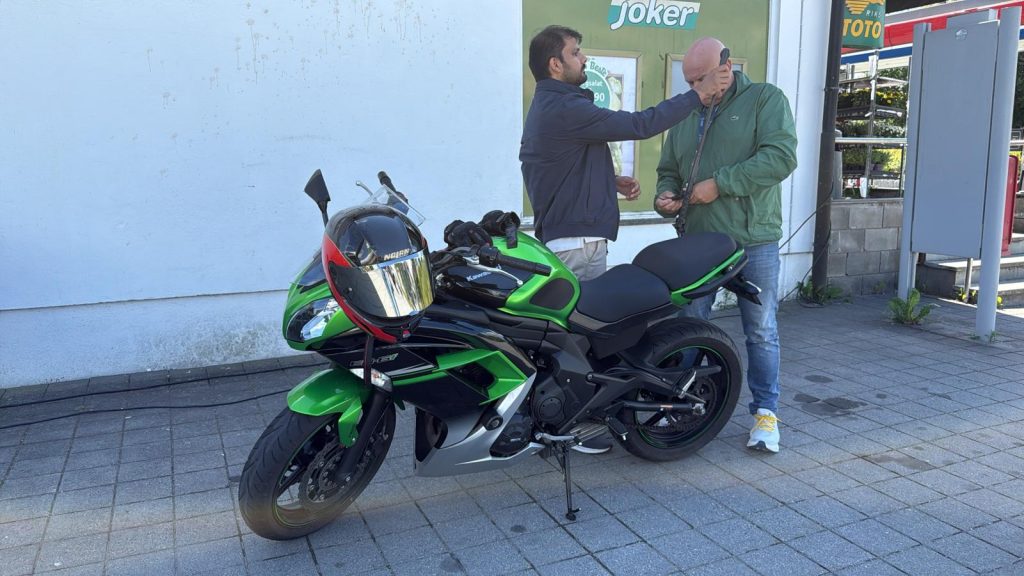
A total of 51 motorcyclists participated in this first phase of the study. The participant group reflected the diversity of the riding community, including both male and female riders with different levels of riding experience. The motorcycles themselves represented a broad range of vehicle categories, including sport bikes, touring motorcycles, enduro motorcycles, and electric motorcycles.
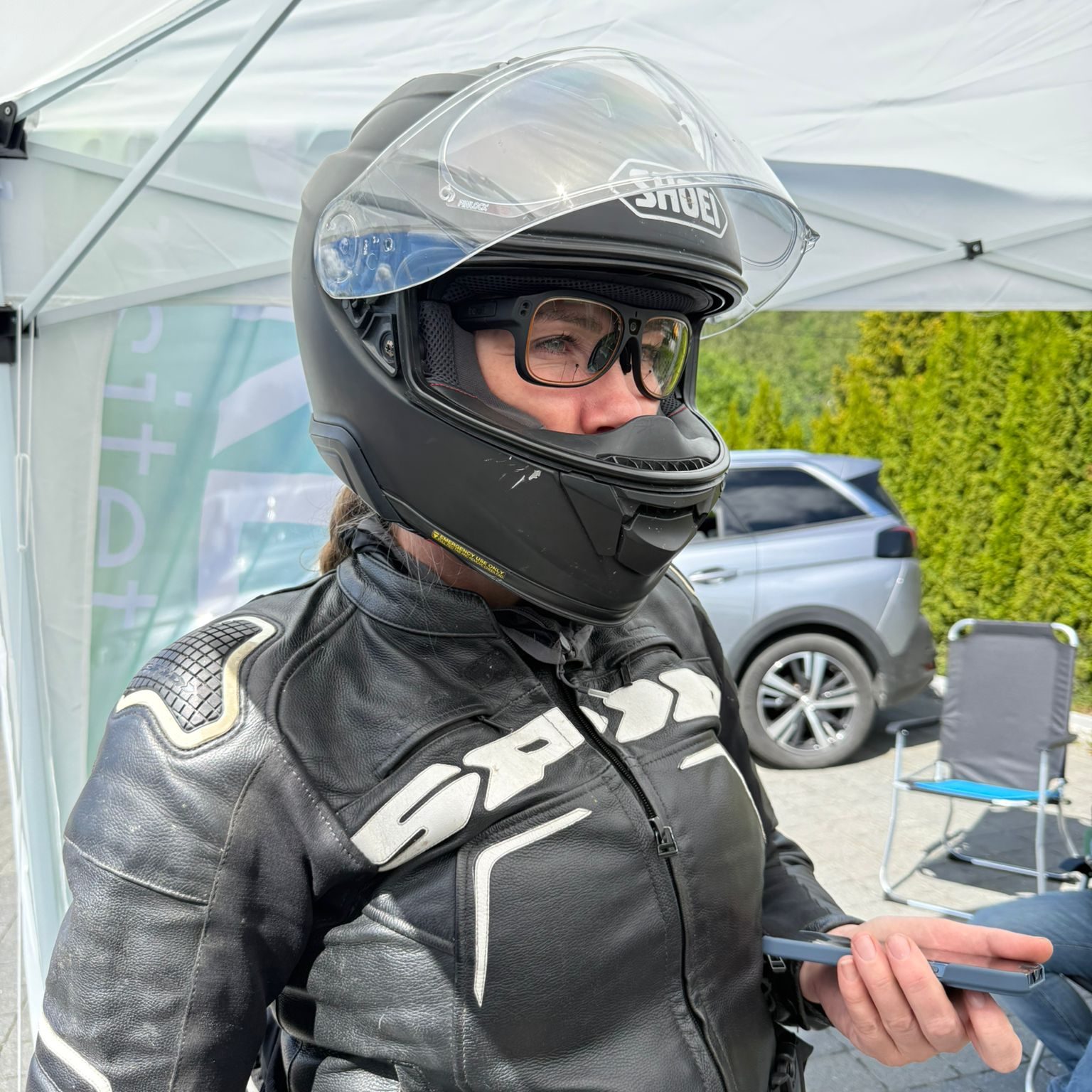
Before each riding session, participants were equipped with eye-tracking glasses capable of recording precisely where they looked during the ride. After a calibration procedure, each rider completed a route of approximately 20 minutes, allowing researchers to collect detailed information about gaze behaviour, visual attention, and interaction with the road environment.
The objective is not only to understand whether the markings attract attention, but also whether they help riders identify safer trajectories through curves and make better riding decisions. Equally important is determining whether the markings could unintentionally draw attention away from other critical sources of information in the traffic environment.
In addition to the objective eye-tracking measurements, each participant took part in a short interview immediately after the riding session. These interviews provide valuable qualitative insights into how riders perceived the road markings, what elements attracted their attention, and how they experienced the route overall. Combining objective behavioural measurements with subjective feedback allows researchers to develop a more complete understanding of how riders interact with the road environment.
The data collection phase marks an important milestone in the project. Over the coming months, the research team will analyse both the eye-tracking recordings and the interview material to identify behavioural patterns and evaluate the potential effects of motorcycle-specific road markings.

The project brings together expertise in road safety, human factors, rider behaviour, and eye-tracking research. Ultimately, the goal is to support the development of safer roads for motorcyclists through scientifically grounded evidence.
As the project continues, the collected data will help answer a fundamental question: can small visual changes in road infrastructure help motorcyclists make safer choices—or do they alter attention in unexpected ways?
At TRAFIKKLAB, we believe that understanding how riders actually use visual information on the road is a crucial step toward improving motorcycle safety for everyone