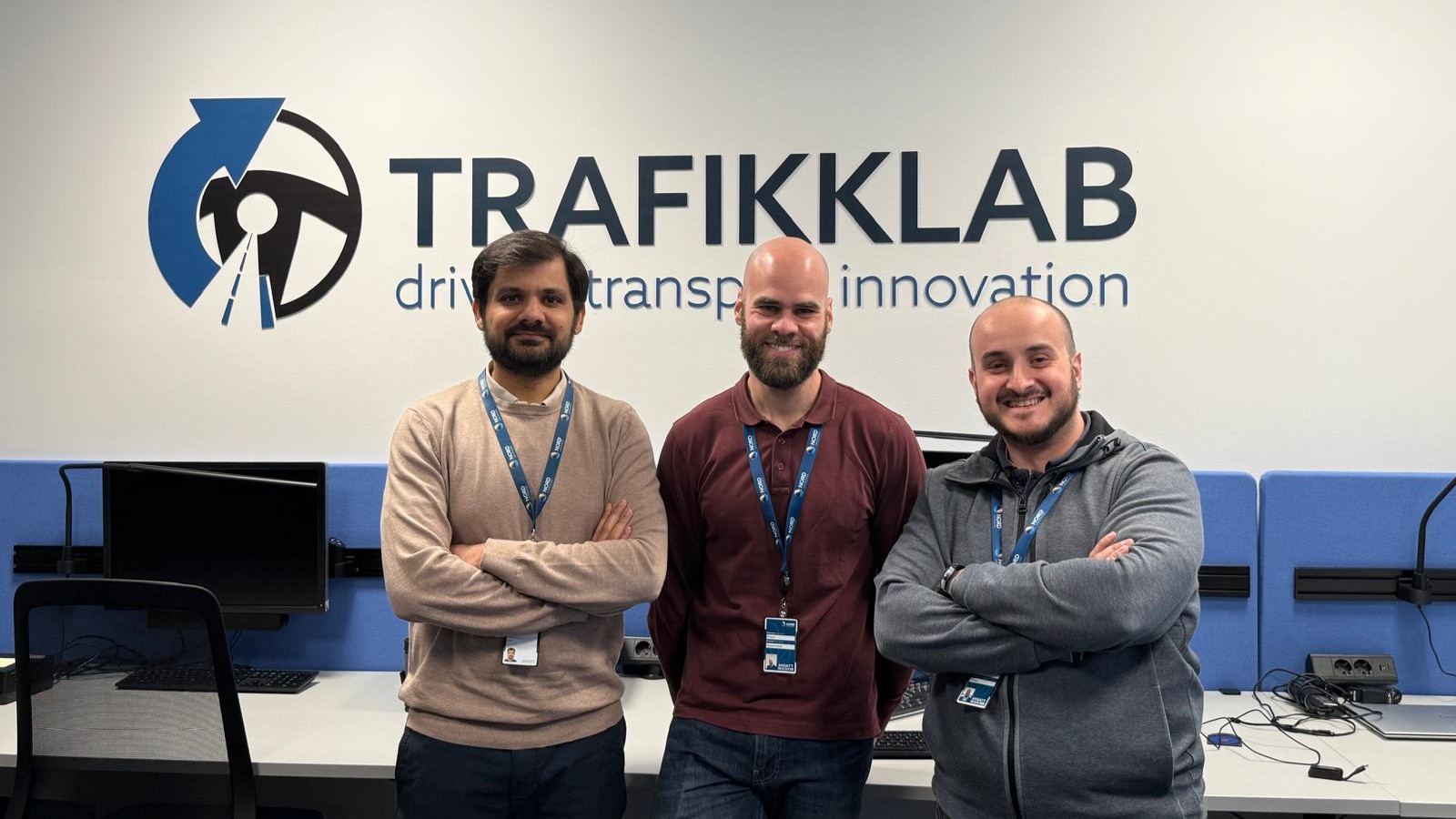
TRAFIKKLAB is pleased to announce the start of a new research collaboration with the University of Catania (Italy), aimed at advancing knowledge on road safety in complex traffic environments. As part of this cooperation, we are delighted to welcome Andrea, PhD candidate at the University of Catania, who will be a visiting researcher at Trafikklab in Stjørdal from mid‑April to the end of June.
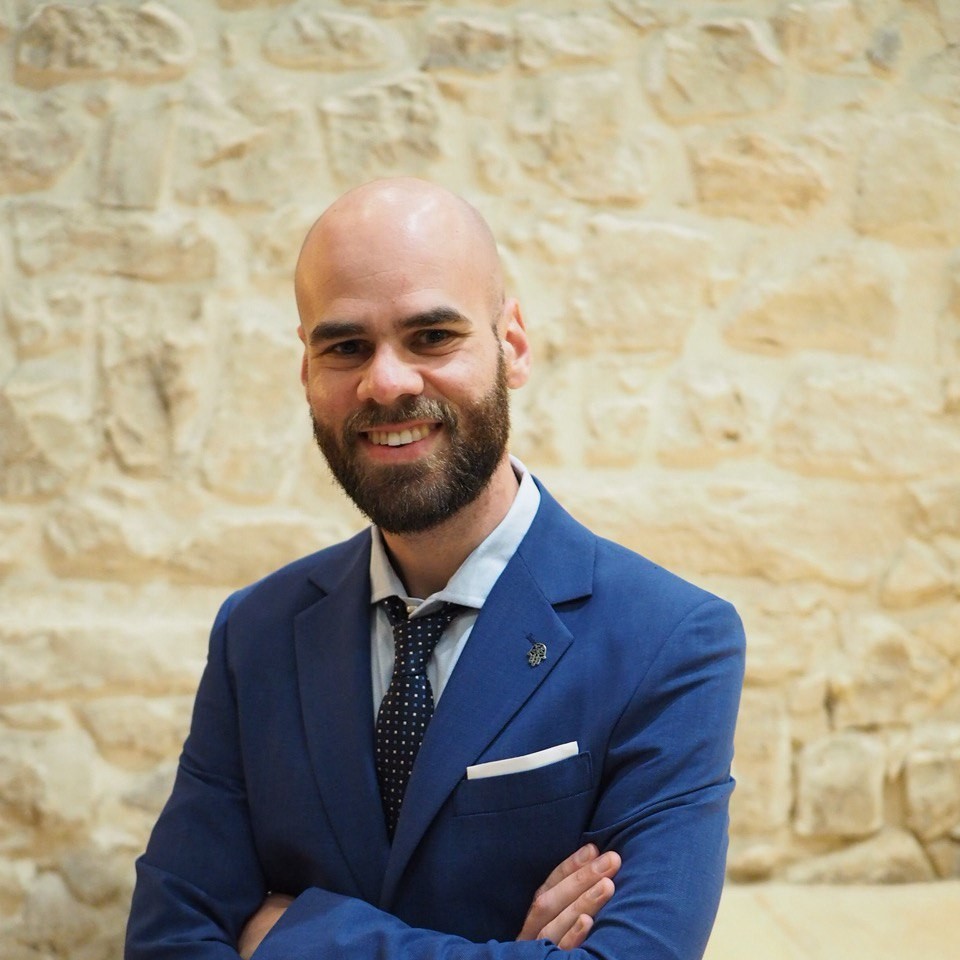
Giovanni Andrea Dimauro graduated in Water and Transportation Civil Engineering at the University of Catania, Italy. He is a licensed civil engineer and is currently a PhD student in the 40th cycle in the program on Evaluation and mitigation of urban and territorial risks. He is a junior member of the Italian Society of Road Infrastructure (S.I.I.V.). His research focuses on road safety, traffic simulation, vulnerable road user safety, and cooperative intelligent transportation systems.
The research group in Catania is led by Professor Salvatore Cafiso and Giuseppina Pappalardo, focused on research in road design, traffic engineering and safety analysis. This collaboration brings together complementary expertise in human factors, driving behaviour and intelligent transport systems, strengthening the international dimension of TRAFIKKLAB ’s research activities.
Research focus: early hazard warnings and driver behaviour
During his stay in Stjørdal, Andrea will work on a research project investigating how drivers of conventional vehicles (automation levels L0–L1) respond to early hazard warnings provided by Vehicle‑to‑Infrastructure (V2I) systems.
Many road crashes, particularly those involving vulnerable road users such as cyclists, occur at intersections or in situations with limited visibility. In such scenarios, drivers often detect the hazard only when the time available to react is already insufficient, making even technically correct evasive manoeuvres ineffective.
V2I safety systems have the potential to detect conflict situations that are not yet directly perceivable by the driver—for example, a cyclist approaching from an occluded direction—and to transmit a warning before the hazard becomes visible. While these technological solutions are developing rapidly, the vast majority of vehicles currently in use still rely almost exclusively on the perceptual and decision‑making capabilities of the human driver. Understanding how drivers respond to this early, indirect information is therefore a key research challenge.
Trust, timing and human‑centred design
A central aspect of the research concerns the interaction between the warning system and human behaviour. Unlike conventional alerts, the driver receives information that has not yet been confirmed by their own sensory input. This places the driver in a non‑conventional phase of the perceptual process and requires a rapid assessment of both the credibility of the warning and its usefulness for the driving task.
The study aims to identify:
- the conditions under which early warnings are perceived as reliable and lead to timely and effective responses;
- the circumstances in which warnings are ignored or interpreted as false alarms;
- the role of timing and intrusiveness in shaping driver trust and system acceptance.
A key focus is the delicate balance between useful anticipation and excessive intervention. Warnings triggered too late are ineffective, while excessively early alerts risk being ignored or undermining the driver’s trust in the system.
Experimental work in Stjørdal and Catania
At TRAFIKKLAB, Andrea will develop the driving scenarios, program the simulator experiments, and collect the first experimental data. Driving simulators make it possible to expose drivers to critical situations in a controlled and repeatable way, allowing detailed analyses of reaction times, braking behaviour and acceptance of the warning system.
After this initial phase in Norway, the research will continue with a twin study in Catania, using a comparable experimental design. This parallel approach will allow cross‑site comparisons and will strengthen the robustness and generalisability of the results.
Looking ahead
This collaboration reflects Trafikklab’s commitment to developing genuinely human‑centred safety systems, capable of reducing crash risk in the most critical traffic situations. At the same time, the project contributes to a deeper understanding of how trust in intelligent transport technologies is formed, providing concrete guidance for the design of future warning systems that operate in harmony with human behaviour.
We warmly welcome Andrea to Stjørdal and look forward to a productive and inspiring collaboration!