We have just finished the first part of an experimental study with the cold-water coral Desmpophyllum pertusum. We exposed the corals to a combination of two chemicals commonly used in aquaculture – Azamethiphos (an anti-sea lice bath treatment) and Tralopyril (an new anti-fouling agent to prevent growth of organisms on farm nets).
Our team led by Birte Schuppe, consists of Renate, Sara, Alia, Roraima and two internship bachelor students from France, Servane and Vesna. They worked hard in the last three weeks to test the physiological and behavioral response of the corals to the chemical mix. Corals were kept in darkness inside mini recirculating systems (RAS) to ensure continuous exposure in a controlled environment.
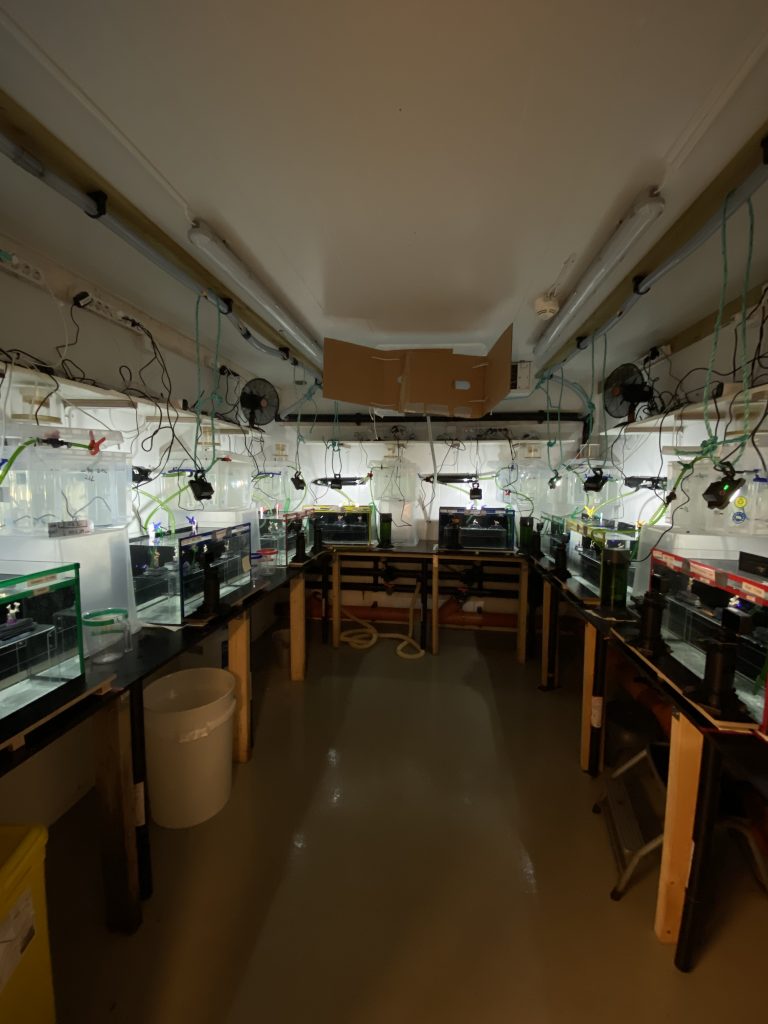
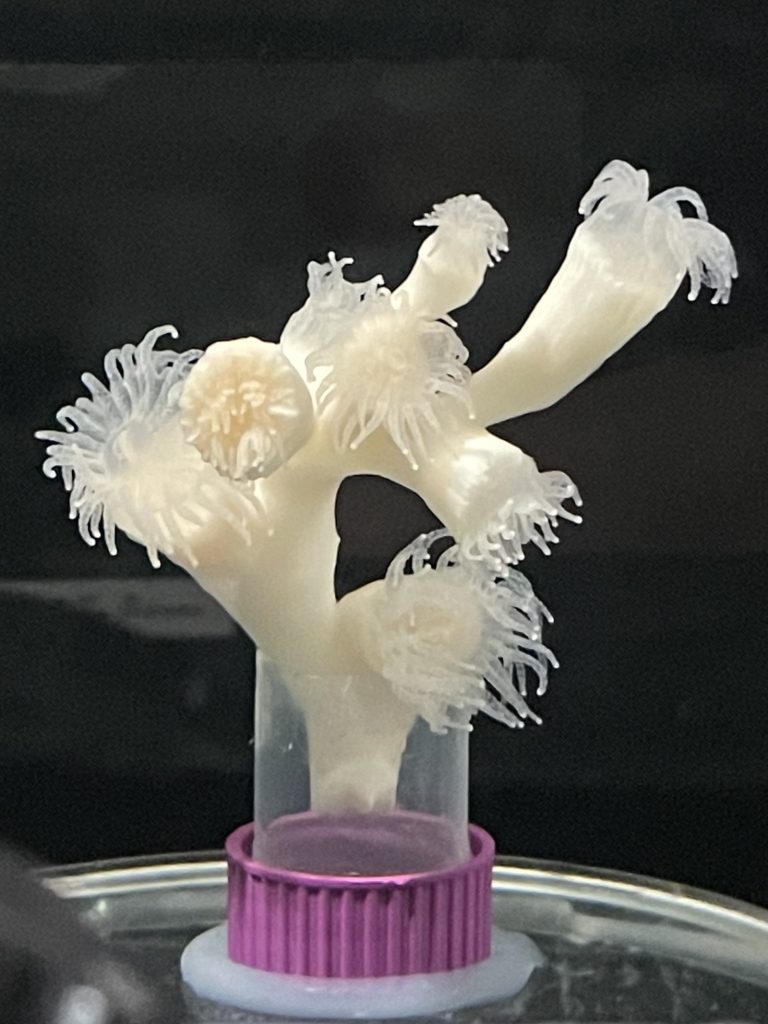
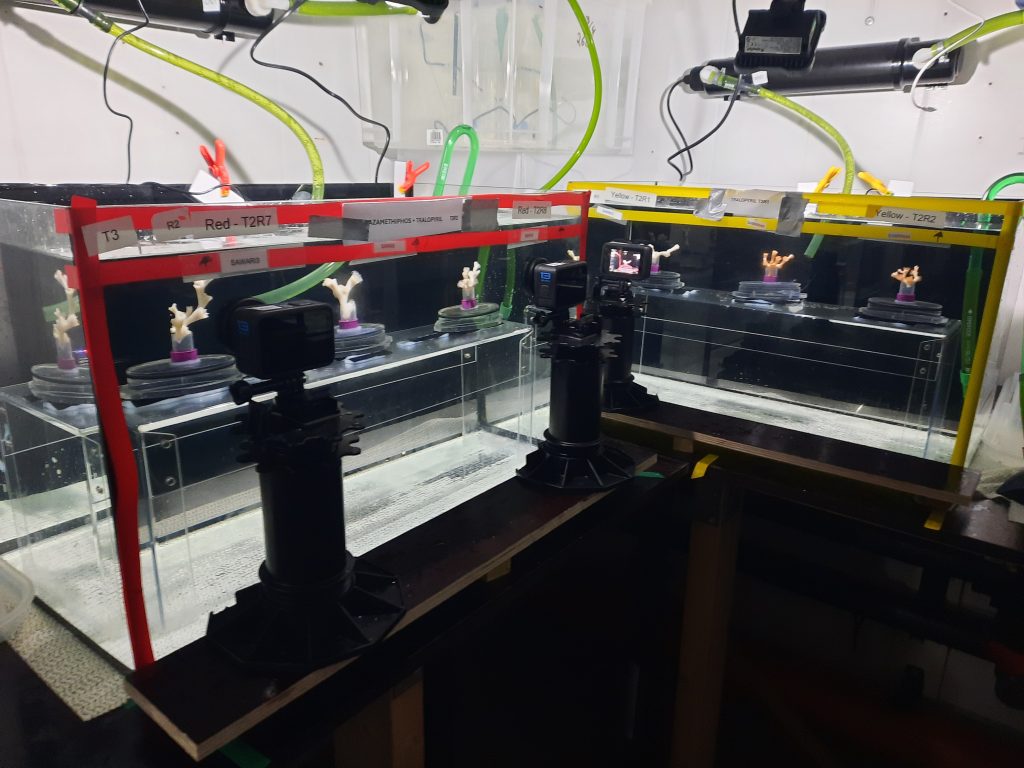
Respiration rate and ammonia excretion were measured to better understand how the corals cope physiologically with the potential stress of these toxic checmicals. Also, a Gopro-camera system was used to record the visual behaviour and stress response of the coral, e.g. coral poly activity. In a previous experiment their polyps were found to be slightly less active when exposed to emamectin benzoate (another anti-sea lice treatment).
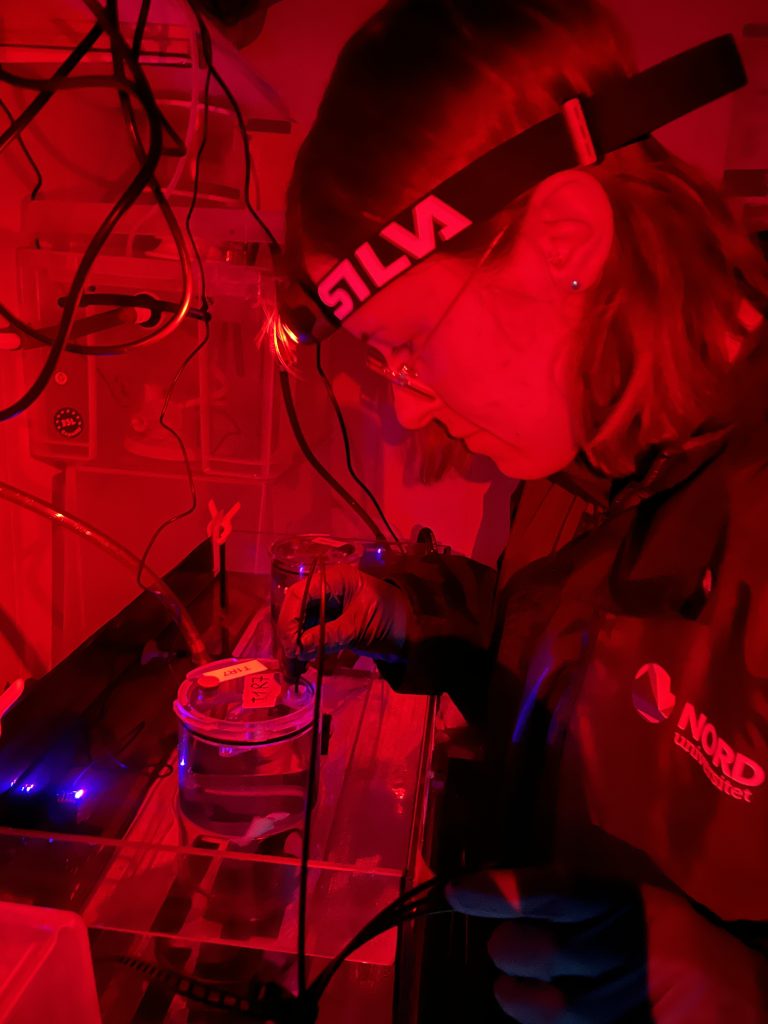
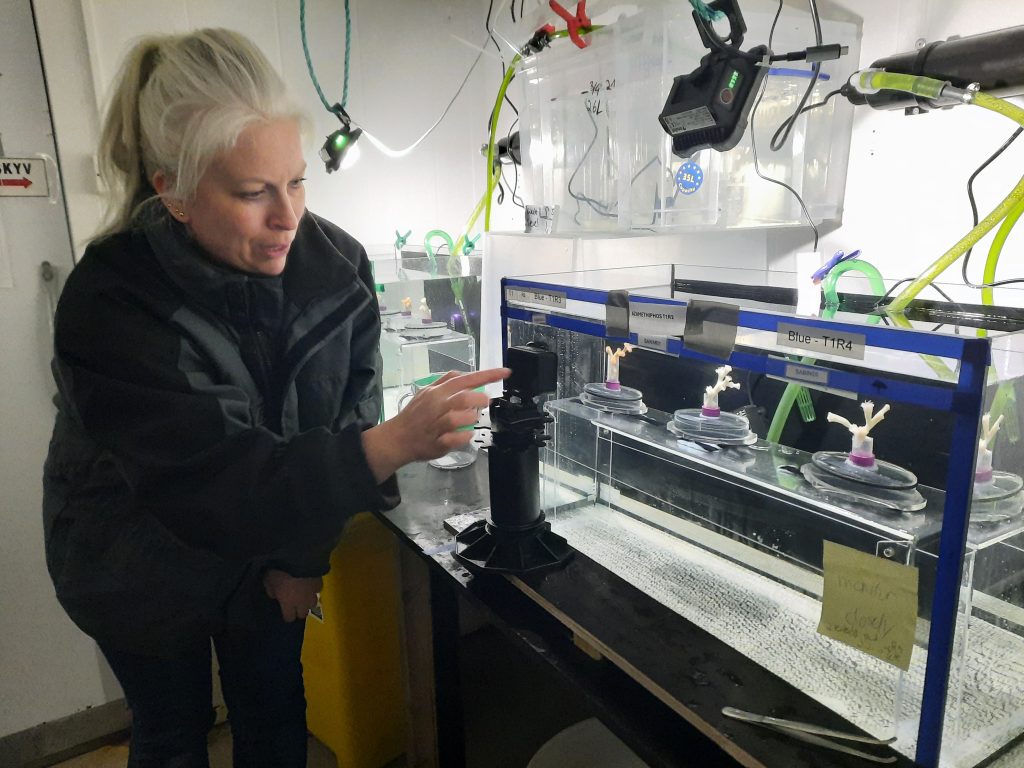
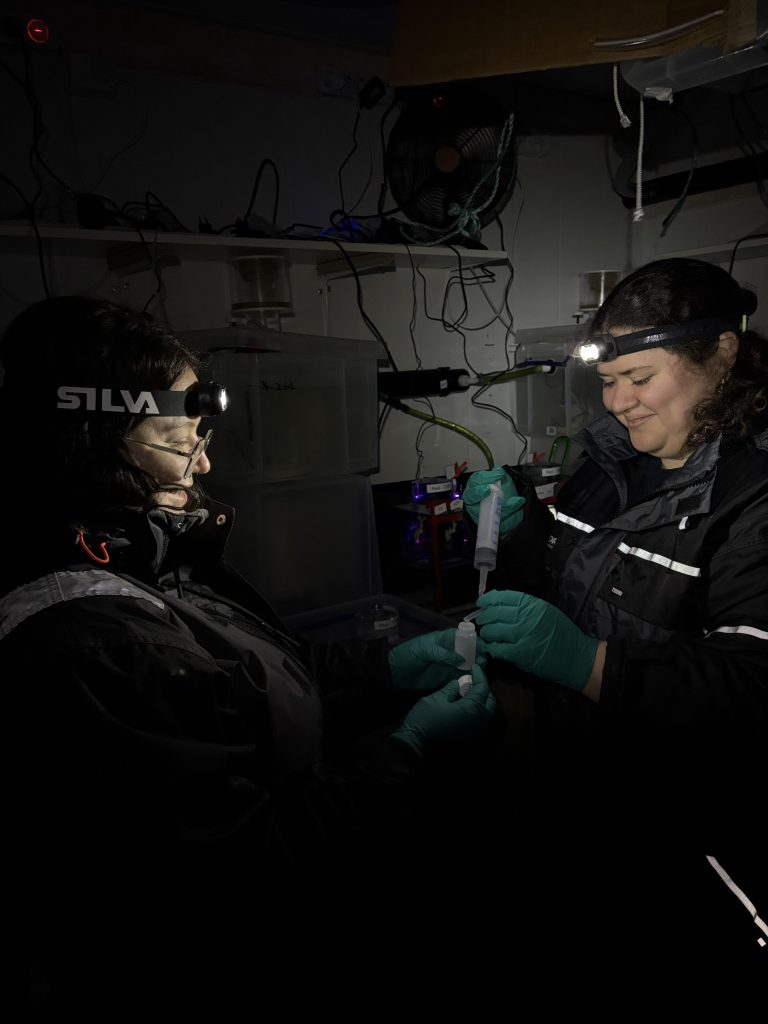
The corals might also produce mucus as defense mechanisms, which would be visible in the more than 1000 photos taken in the first part. At the end of the experiment all corals had to be snap frozen in liquid nitrogen and stored at -80°C to be tested for uptake of the two chemicals in their tissue. This experiment is part of Birte’s PhD thesis and partly funded by the VDWS project. This week the second phase of the experiment has started. More news to come… and soon an answer to the title question.