
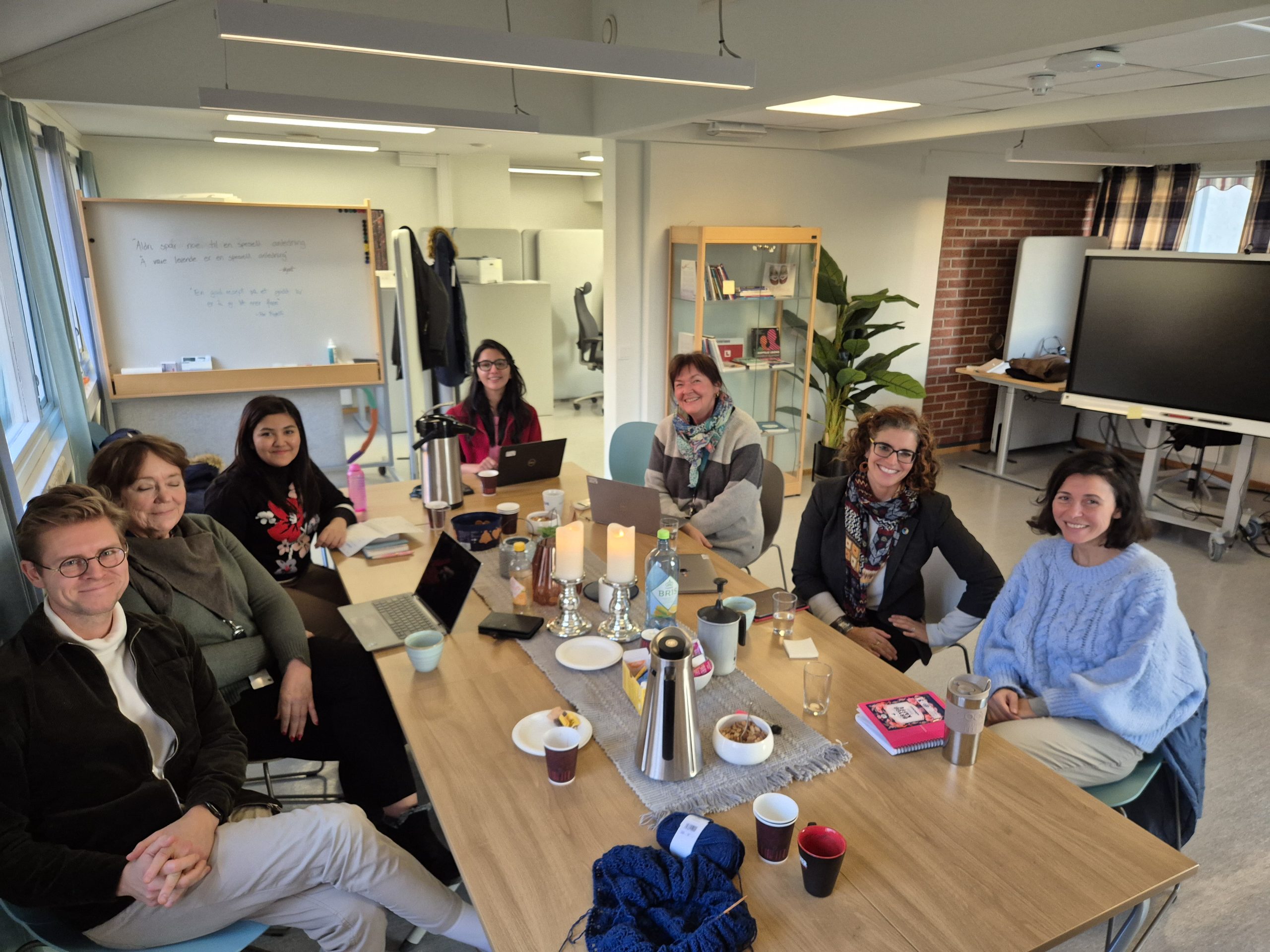
By Zin Mie Sharr, Anna CohenMiller and Oddlaug Lindgaard, 22 June 2026
G. K. Chesterton once noted the fascinating aspects beneath the water, and not just any water, but ditchwater: “Is ditchwater dull? Naturists with microscopes have told me that it teems with quiet fun.” This quote is a reminder that when we look closely, and when we look together, even the most familiar parts of higher education reveal new life. That spirit of curiosity is at the heart of LEARN‑HigherEd.
LEARN‑HigherEd grew from a deep interest in creating meaningful positive change in higher education teaching and learning. We had seen over the years great people, amazing researchers, and practitioners who have so much to offer in their work feel alone and unsure where to come together to find like-minded folks. And this is where the LEARN-HigherEd comes in, to create a community where anyone is welcomed – any discipline, experience, and seniority – within a space purposefully created to be flexible for the needs of those involved.
What we have found has been inspiring. So, what happens when people with different experiences, disciplines, and ways of thinking meet, what happens? Sometimes it’s friction, most frequently a friction that creates sparks that may lead to new insights, new questions, and new possibilities for teaching and learning in higher education.
We’re a research group that cares about research‑based praxis in higher education teaching and learning, about connecting ideas to practice, and about doing so in ways that are inclusive, equitable, and future‑oriented. One of the things that make us unique is the mix of people who show up: early‑career researchers, experienced scholars, people with industry backgrounds, people from different countries and cultures, and people who carry different assumptions about what “good teaching” or “good research” looks like. Those differences are not obstacles in our views but they’re the energy source.
What We’re Trying to Build
LEARN‑HigherEd is hosted at PLUS: Centre for Professional Development and Learning at Nord University, but it’s open internationally; open to disciplines, open to levels of experience, open to different forms of participation. We’re interested in pedagogy and learning in the broadest sense: how people learn, how teachers grow, and how higher education can become more inclusive, flexible, and responsive to the world around it. We warmly invite educators who want to research their own praxis to join us — whether you have a fully formed project or just an idea you’d like to explore, LEARN-HigherEd is a place to discuss, pilot, and develop your thinking together with others
Our work stretches across settings and contexts, and we take a proactive, justice‑oriented approach. That means we’re not only studying higher education as it is, but imagining what it could potentially be and trying to contribute to that future through research, dialogues, and shared practices.
What We Do (and How We Do It)
The group is designed to be flexible. People join in ways that fit their interests, time, and energy. Some come for conversation and reflection; others come for writing support or collaborative projects. Some want to share resources; others want to test ideas or practice presentations. All of that is welcome.
Our activities may include, but are not limited to:
- online and/or face-to-face meetings
- sharing resources
- writing retreats and/or workshops
- practicing presentations
- offering feedback
- collaborative writing / publication
- developing teaching resources
- applying for funding
All of this is part of creating a Faculty Learning Community that supports growth, curiosity, and cross‑disciplinary collaboration.
Why We’re Excited
We’re excited because we’re building a space where people can think together across boundaries; be it disciplinary, cultural, methodological, and experiential. And we’re seeing it work! We have met throughout the last semester monthly with volunteers offering to present research in progress or completed work for feedback.
We are excited because we are embodying the inclusive spaces we are seeking to create in teaching and learning in higher education. While we focus on research that is inclusive, flexible and humane, we also seek to embody that in our discussions and feedback and support of one another. Online during the official meeting and afterwards in open conversation, the flow of ideas are presented, and offer encouragement and practical support for the next steps in research and praxis.
And we are excited because our experiences show us that meaningful change often starts in small groups like this, where ideas are allowed to breathe and evolve.
An Invitation
If you’re curious about pedagogy, professional development, the future of higher education, or if you simply want a space to think, write, and learn with others, you’re welcome to join us. Whether you’re early in your career or an established researcher, whether you come from academia or industry, whether your work is local or global, there’s a place for you here.
And for colleagues across the SEA‑EU alliance, this is also an open door. We’d love to connect, collaborate, and grow this network together. After all, the more perspectives we bring into the room, the more sparks we create.
For more information, we look forward to hearing from you:
Anna S. CohenMiller (anna.cohenmiller@nord.no) and Oddlaug Marie Lindgaard (oddlaug.m.lindgaard@nord.no)
.
Resources
- G.K. Chesterton (as cited in Gratzer, 1996, p.3)[1] [2] – Gratzer, W. (Ed.). (1996). A Bedside “Nature”: Genius and eccentricity in science, 1869 – 1953. Macmillan Magazines.
- LEARN-HigherEd at the SEA-EU Alliance website – https://research.sea-eu.ug.edu.pl/research-group/1042/learn-highered-leading-education-and-research-network-higher-education