
A comprehensive review published in Science of The Total Environment shows that per- and polyfluoroalkyl substances (PFAS) now contaminate Arctic air, water, wildlife and people.
The paper, led by Rainer Lohmann and co-authored by ArcSolution partner Christian Sonne and colleagues, concludes that PFAS concentrations are rising again in key Arctic species, while the same chemicals are affecting human immune systems and reproduction.
What the review found
The review brings together decades of monitoring data on PFAS in the Arctic. It traces how these chemicals move from industrial products, wastewater and consumer goods into air and ocean currents before accumulating in Arctic food webs.
The authors show that two compounds dominate exposures across wildlife: perfluorooctane sulfonic acid (PFOS) and perfluorononanoic acid (PFNA). The highest concentrations are found in mammal livers and seabird eggs.
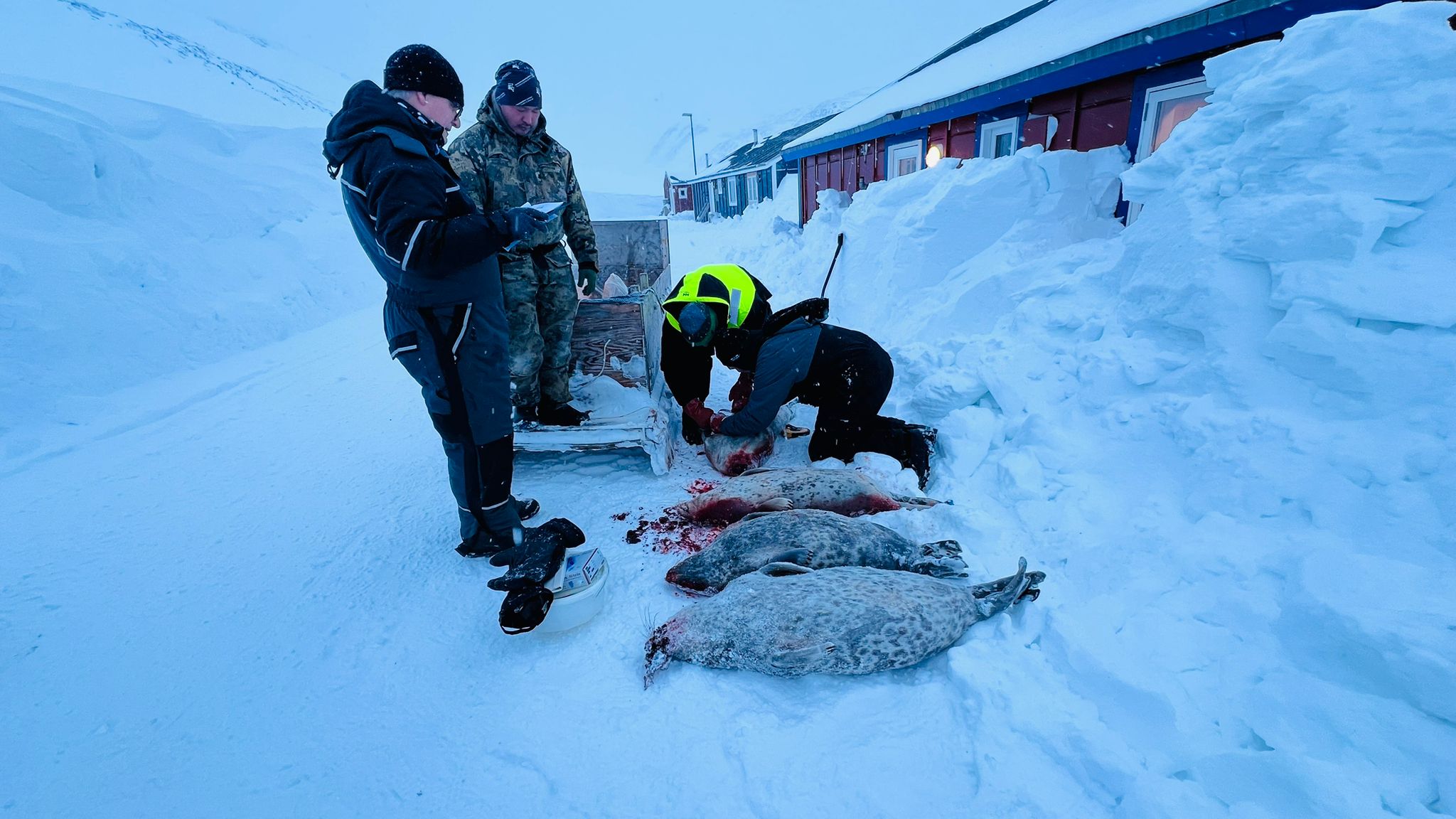
In East Greenland, PFOS levels in ringed seals and polar bears increased steadily until 2006, fell for a period and then began rising again between 2014 and 2021. PFNA continues to increase in Canadian and Greenlandic ringed seals and in polar bear livers.
The review also highlights differences in human exposure. In Arctic communities that rely heavily on marine mammals and seabirds for food, PFAS concentrations are often higher and in some cases exceed health-based thresholds.
Similar effects in people and wildlife
One of the review’s clearest messages is that PFAS do not affect humans and wildlife separately. The same chemicals linked to immune suppression, hormone disruption and reproductive problems in people are also affecting polar bears and seabirds.
The authors note that PFOS levels in polar bears exceed those measured in many human populations. This suggests that Arctic wildlife may face even greater risks than people in some regions.
For Indigenous communities, PFAS are not only an environmental issue. Because many families rely on traditional foods such as marine mammals, exposure to these chemicals can also affect food security, health and cultural practices.
Why the Arctic is vulnerable
The Arctic is particularly exposed because PFAS can travel long distances through air and ocean currents. Even though many of these chemicals are produced far from the north, they still end up in Arctic ecosystems.
Volatile PFAS compounds move through the atmosphere and later break down into more persistent substances. Other PFAS travel northwards in ocean currents. Imported products, waste and landfill leachate may also contribute to local contamination.
What needs to happen
The authors argue that stronger international action is needed to reduce PFAS pollution.
They call for:
- More monitoring across all Arctic regions, including Russia
- Better methods to detect new and emerging PFAS compounds
- Stronger international restrictions on PFAS production and use
- Improved wastewater treatment and waste management
- Closer collaboration with Indigenous and local communities on risk communication and food guidance
Linking the findings to ArcSolution
The review is highly relevant for ArcSolution because it shows how contaminants move between the environment, animals and people. By combining chemical monitoring, wildlife studies and human health data, the paper reflects the kind of One Health approach that ArcSolution aims to strengthen across the Arctic.
Read the full paper: Cross-cutting studies of per- and polyfluorinated alkyl substances (PFAS) in Arctic wildlife and humans, published in Science of The Total Environment.