
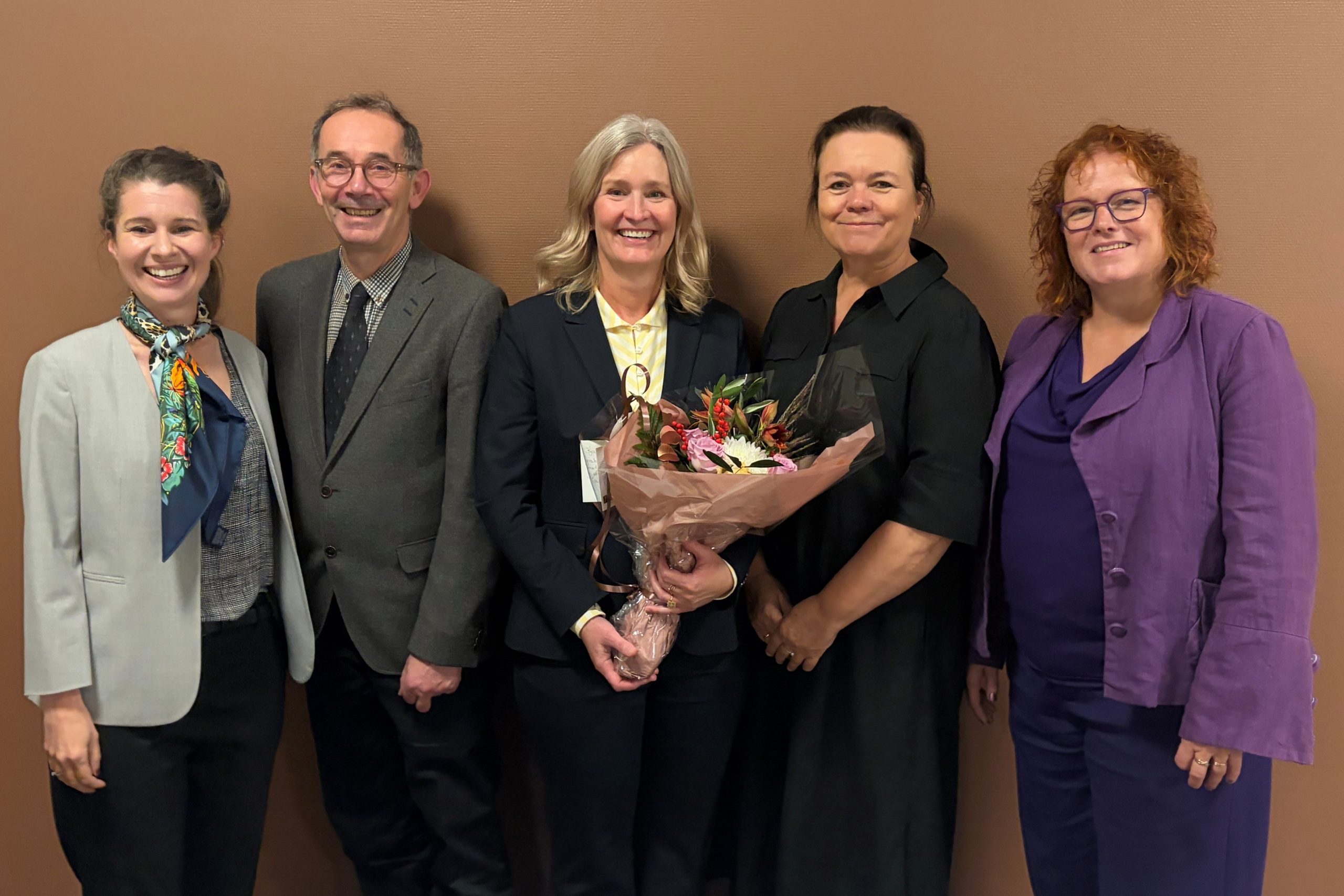
Congratulations to English Department colleague Ingrid Hekneby Braseth, who successfully defended her PhD dissertation on 27 October 2026 at the university’s Bodø Campus.
Her dissertation, titled “Enter the Adventure – Bridging Aesthetic Learning Processes, Adolescent Learners, and English Second Language Learning through a Multimodal Dialogue and Narrative Journey,” investigates the value of aesthetic learning processes in English as a second language for adolescents.
Prof. Jessica Allen Hanssen and Dr. Ann Karin Orset of Nord University supervised Braseth’s doctoral project.
Opponents were Prof. Kristin Helstad from Oslo Metropolitan University (OsloMet) and Associate Professor (Docent) Dr. Adrian Ratkic from Södertörn University, Sweden. English Department colleague Dr. Anke Zondag chaired the assessment committee, and the formal proceedings of the defense were led by Dean Rose Martin, FLU. As part of the defense, Braseth also delivered a trial lecture titled “Aesthetic Learning Processes in Teacher Education: Conditions for and Approaches to Implementation. Professional and Didactic Perspectives.”
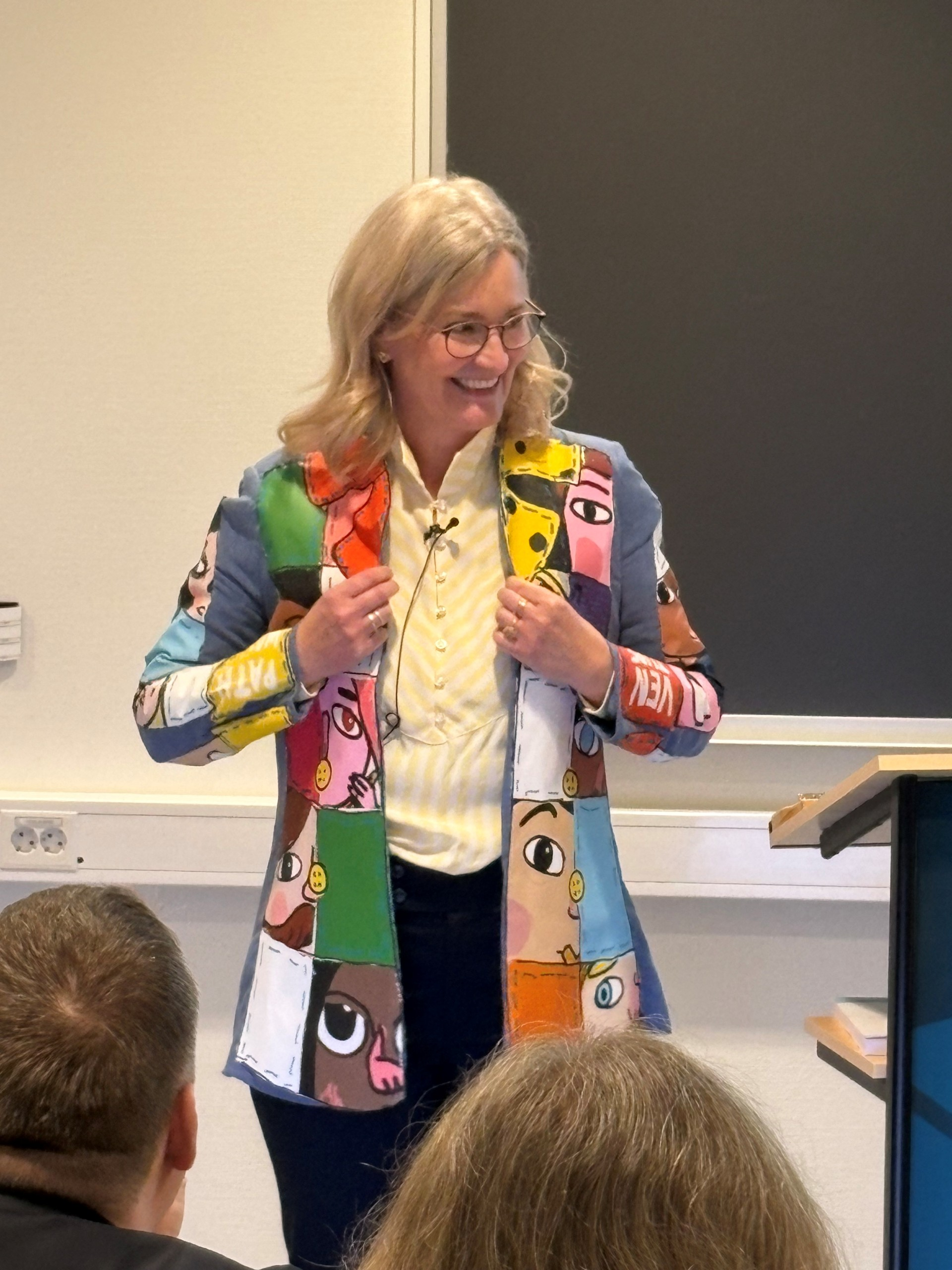
Reflecting on the completion of her PhD, the new doctor said:
Completing my PhD feels both like the end of a long adventure, as I have called it in my PhD thesis, and the beginning of a new one. Throughout the process, I’ve learned so much about research, academic writing, and perseverance, and I’m excited to bring those experiences into my teaching and supervision. I’m especially looking forward to working with MA students and supporting them as they develop their own research projects. Having recently navigated that process myself, I hope I can offer both practical guidance and encouragement along the way.
I’m also excited to continue developing ideas from my doctoral research into future publications and collaborations. Most of all, I look forward to returning to the things that drew me to academia in the first place: curiosity, learning, and the opportunity to explore ideas together with students and colleagues.
Congratulations to Dr. Braseth!
Brief summary of the dissertation:
This doctoral dissertation consists of three sub-studies that together investigate the value of aesthetic learning processes in English as a second language for adolescents. In doing so, it employs a novel, creative, and multimodal qualitative research design called multimodal dialogue and narrative journey. At the core of the study are empirical data from pupils, student teachers, teachers, and the researcher herself. The study examines how aesthetic learning processes are used in English language teaching in Norway and explores their significance for students’ learning.
The findings show that aesthetic learning processes in English as a second language are multifaceted and offer a wide range of opportunities and learning resources. These are elaborated through concepts such as LearningExperience and The Good Lesson, as well as through a definition of aesthetic learning processes in English as a second language and a reimagined didactic relational model.
The findings further indicate that the use of aesthetic learning processes can have positive effects on relationships within teaching and learning situations, as well as on teachers’ professional development. Taken together, the findings strengthen the argument that adolescent learners should have opportunities to experience aesthetic learning processes in English as a second language.
The dissertation contributes new empirical and theoretical insights into aesthetic learning processes in English as a second language for adolescents. Although grounded in this particular context, the contributions of the dissertation are relevant to educational practice across subjects and age groups. It also makes a methodological contribution by demonstrating how creative research approaches can emerge through the interaction of empirical material, theoretical perspectives, and creative inquiry.